

The U.S. Department of Veterans Affairs (VA) has announced a sweeping policy change, canceling all collective bargaining agreements for over 377,000 of its employees—roughly 75 percent of the department’s total workforce of 483,000.
This decision, made public last week, is framed by the department as a “necessary step” to streamline operations and improve services to America’s veterans. The move follows an executive order issued by President Donald Trump, which excludes certain agencies from participating in federal labor-management relations programs on national security grounds.
Under this directive, the VA has ended union contracts for employees represented by major labor organizations such as the American Federation of Government Employees (AFGE), the National Association of Government Employees (NAGE), the National Federation of Federal Employees (NFFE), National Nurses United (NNU), and the Service Employees International Union (SEIU).
The VA insists that terminating collective bargaining agreements will allow the department to “promote high-performing employees, hold poor performers accountable, and improve benefits and services to America’s Veterans.”
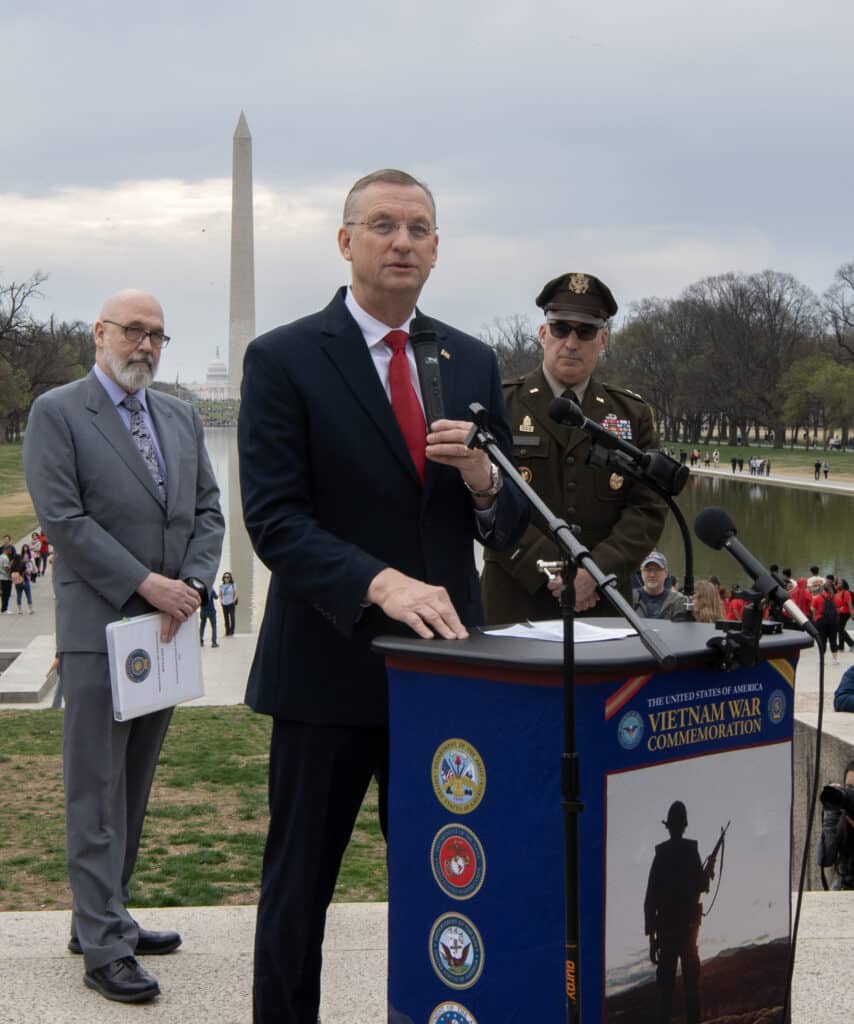
VA Secretary Doug Collins defended the decision, saying, “Too often, unions that represent VA employees fight against the best interests of veterans while protecting and rewarding bad workers. We’re making sure VA resources and employees are singularly focused on the job we were sent here to do: providing top-notch care and service to those who wore the uniform.” While specialized roles like police officers, firefighters, and security guards remain exempt, the vast majority of VA employees, who serve more than 9 million veterans annually, will now operate without formal union contracts.
Background of the Decision
This move follows an executive order signed by President Donald Trump back in February, which effectively ended collective bargaining with federal workers unions representing over a third of all federal employees. While a number of lawsuits challenging the order remain ongoing, the Ninth Circuit Court of Appeals has allowed the administration to continue implementing the changes, including the termination of union contracts, while the legal proceedings unfold.
The shift is part of a broader effort to reduce union influence within federal agencies, with the VA being the first to fully sever ties with its union workforce. The department claims that the change will help improve efficiency, reduce bureaucratic obstacles, and allow for greater flexibility in addressing employee performance.
Veteran Labor Unions Push Back
The decision has been met with intense backlash from labor organizations, including those representing VA staff. In particular, unions with chapters in South Dakota have voiced concern that the cancellation of union contracts will negatively impact the care veterans receive at VA hospitals across the state.
“We have been working hard to ensure veterans get the best care possible,” said a representative from one of the affected unions. “Now, we’re being told that the department believes unions are standing in the way of this mission. That couldn’t be further from the truth.”
In response to these criticisms, VA Press Secretary Pete Kasperowicz disputed claims that veterans’ care would suffer as a result of the policy change. In a statement provided to The Dakota Scout, Kasperowicz stressed that the VA is “singularly focused on the job we were sent here to do: providing top-notch care and service to veterans.”
“The decision to end collective bargaining is not about ‘union-busting,’” Kasperowicz said. “It’s about reforming the way the department operates, ensuring that our employees are focused on serving veterans efficiently and effectively.”
However, the unions argue that canceling contracts will reduce workplace protections and hamper the department’s ability to retain and attract skilled professionals, especially amid the ongoing challenges of staffing shortages and rising demand for veterans’ services.
The Impact of Ending Union Contracts
The impact of the VA’s decision is expected to be felt nationwide, with particular concern in states like South Dakota and North Carolina, where the department’s workforce plays a critical role in providing care to veterans. In South Dakota, several VA hospitals are already grappling with staffing shortages and capacity issues, and the termination of union contracts has raised fears of further deterioration in working conditions. Without formal agreements, employees may lack the ability to negotiate for better wages, working conditions, and healthcare benefits, which could lead to decreased morale among frontline staff, including nurses, doctors, and support personnel.
In North Carolina, home to more than 600,000 veterans and a large VA workforce, the consequences of the policy shift are similarly concerning. With over 17,000 VA employees working across hospitals, clinics, and benefits offices in the state, the cancellation of union contracts raises concerns about staffing retention and the quality of care at major medical centers in cities like Asheville, Durham, and Fayetteville. Local labor groups argue that the loss of collective bargaining rights could result in an exodus of skilled professionals, further exacerbating wait times and care delays for veterans already facing a strained system.
Both South Dakota and North Carolina illustrate how the VA’s decision could have ripple effects, potentially making it harder to retain and recruit staff in an already
The Broader Debate Over Union Influence
The VA’s move is part of a broader shift within the Trump administration to reduce union influence across the federal government. While the decision has been celebrated by some as a necessary reform, others see it as an attack on workers’ rights, particularly those who serve the nation’s veterans.
Democratic lawmakers, union leaders, and veterans’ advocates have expressed concerns that the loss of collective bargaining rights will undermine the quality of care provided to veterans and further strain an already overburdened system.
“This is a direct attack on the rights of the people who care for our nation’s veterans,” said Irma Westmoreland, chair of National Nurses United, which represents thousands of VA employees nationwide. “Without a contract, nurses fear they won’t be empowered to speak up about conditions that put our patients at risk.”
Despite the backlash, the VA has remained firm in its stance, asserting that the ultimate goal is to improve services for veterans. “This is about putting veterans first,” Secretary Collins said. “And if that means upsetting union bosses who’ve been standing in the way of reform, so be it.”
Legal and Political Implications
As the VA’s decision moves forward, it is likely to continue sparking legal challenges and political debates. While the Trump administration’s executive order remains in effect, labor advocates are determined to fight the changes in court, arguing that the loss of collective bargaining rights undermines workers’ ability to protect their interests and negotiate fair terms.
The decision also highlights a growing rift between the federal government and labor unions, particularly in agencies that provide essential services like veterans’ care. As the legal challenges unfold and public debate intensifies, the future of union influence in federal agencies remains uncertain.
For now, the VA remains focused on its mission to improve care for veterans, but critics are closely watching to see how the agency’s decision will affect both its workforce and the millions of veterans it serves.